Wednesday Woodworking – it pulls out

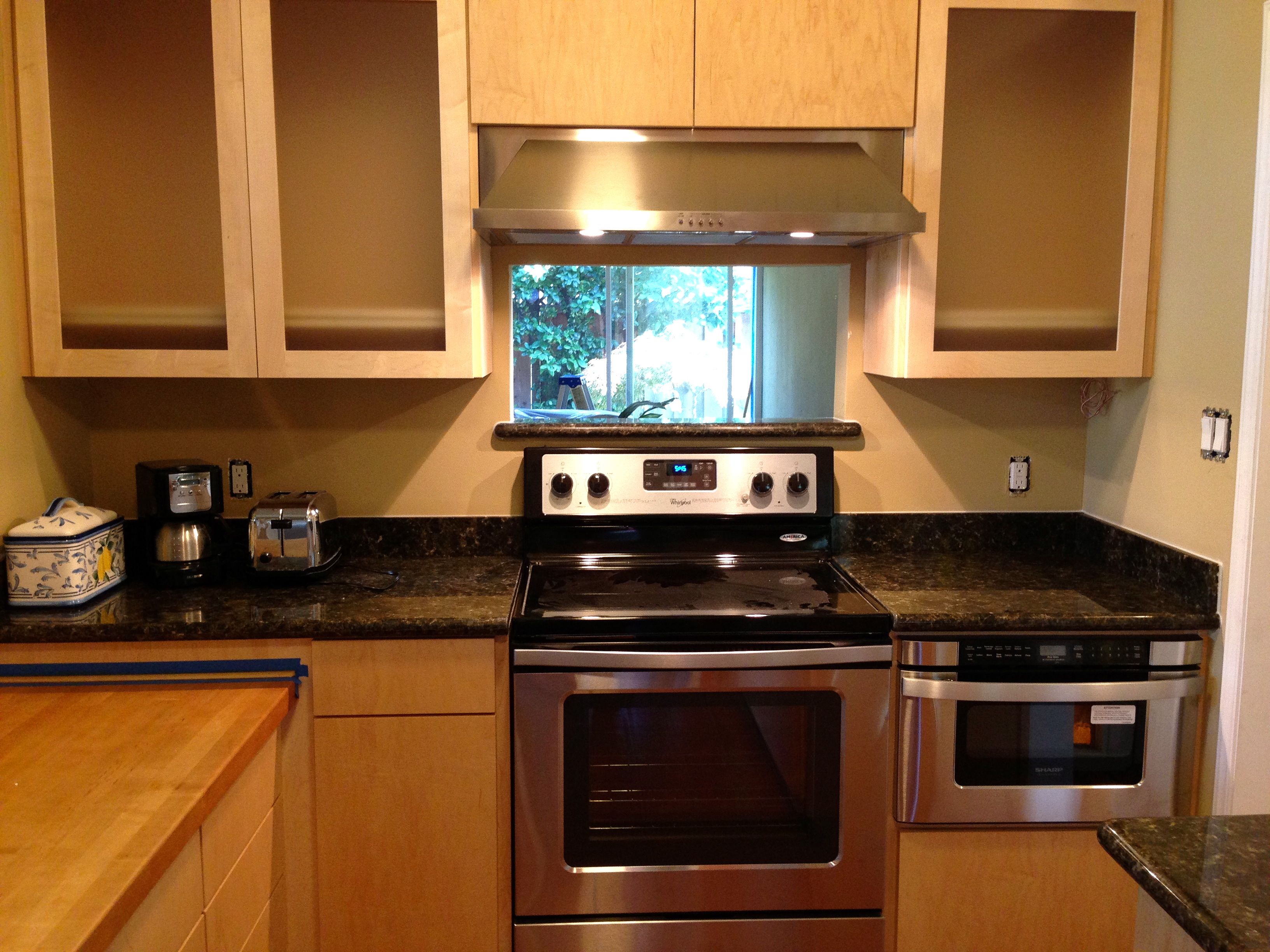
Shelves have been taking up most of my time in shop.  I completed the prototype and have installed it in the closet. The shelves are made from melamine board.  I used this because the melamine has a nice finish for a shelf, requires no painting and was about half the price of plywood.  It cuts just like plywood but is a bit heaver.  The only problem I have with it is that the edges chip easily and it’s to damage it when handling.  On the good side, no painting and doing the edge banding was a snap.


The bits and pieces for doing the edging.  And that's my iron, not my wife's.

The bits and pieces for doing the edging. And that’s my iron, not my wife’s.

The shop iron putting on the edge banding.

The shop iron putting on the edge banding.

Not pulled out.

Not pulled out.

It pulls out!

It pulls out!

That’s it for this week.  Next weekend I have nine more to do to finish the closet.

If you need me – I’ll be in the shop.

Andrew


Posted in woodworking | Tagged , , , , | 3 Comments

Of Blue and Cubes

I’ve lived in the same valley my whole life.  When I was a child, Santa Clara County was in the midst of changing from agriculture to electronics manufacturing.  This valley had a number of things the growing semiconductor industry needed – cheap land, few regulations, several of the best Universities on the west coast providing bright engineers and an impressive  industrial military complex hungry for technology to fight the cold war.

As a child I saw orchards torn out to make way for track homes, old canneries were torn down to make way for semiconductor plants, and new freeways were built to transport the workers in the track homes to the new factories.  It was a time of expansion and opportunity.

But at the same time in the 1960’s and 70’s, the cold war raged and arrayed around my valley were weapons of war – frightful world ending weapons.  On Mt. Umunhum the radar revolved constantly – looking for trace of a feared enemy bomber and an early warning of Armageddon.  Daily the P3 sub-hunters flew over my house on the their way to Moffett Field from their long patrols searching for Soviet subs.  Further away from my valley were the Navy bases in San Francisco Bay, the Air Force bases near Sacramento, Army base at Fort Ord, Nike missile site in Marin and a Naval weapons station where nuclear weapons were stored.

We didn’t feel a constant thread from the “Red Menace” but it was subtext to life in valley.  In school we were told about Civil Defense, had air-raid drills once or twice a year.  We were shown films made during the fifties like this one on fallout:

As a teen I developed an interest post nuclear holocaust films and novels.  I read Alas Babylon, On the Beach, and while it’s not about nuclear war my favorite book was (and still is) Earth Abides and the post holocaust world.  I saw every film that came on with a nuclear theme, On the Beach, Fail-Safe, Dr. Strangelove, Damnation Alley, The Day After and the truly odd, The Bed Sitting Room (where one character mutates into a bed sitting room as the result of being exposed to radiation).

By the time the Berlin Wall came down in 1989 I had been working in the computer manufacturing business in my valley for ten years and change came again.  Over the next few years the computer assembly companies and semiconductor fabrication plants started the migration out of the state and in time out of the country.  The valley changed again – this time towards engineering.  New ventures starting popping up and something called the internet started to take hold.

In 1991 the Soviet Union officially fell and the cold war faded away.  By the mid 1990’s America was closing military bases and the icons of the cold war that I grew up with started to fade and weeds started growing among the disused runways and abandoned buildings.  The radar on Mt. Umunhum stopped turning.  The P3s left the skies.  The Navy left San Francisco Bay. The Nike sites abandoned.

Over the last few months another reminder of that age is being attacked by the wrecking ball and demolition crew.  Everyone here calls it simply, “The Blue Cube,” and in fact it is just a large windowless blue building in a cube shape.  We never really knew what went on inside the building but it had a number of satellite dishes and bristled with antennas.  No one ever talked about what went on in there.

Officially it went by several names during the years, “Air Force Satellite Control Facility,” “Sunnyvale Air Force Base,” and since it was right next to the defense contractor, Lockheed, it was also known as Building 100.  In 1986 the base was renamed, Onizuka Air Force Station after Lt Col Ellison Onizuka who died in the Space Shuttle Challenger disaster (see http://en.wikipedia.org/wiki/Onizuka_Air_Force_Station ).  It was used for tracking satellites and other related communications as part of the Space Operations Squadron.  Few of the people who worked there will tell you anything about what went on there.

And I never asked.

The Blue Cube ceased operation in 2011 and starting a few months ago the heavy equipment moved in and started the process of demolishing the buildings.  It’s sad to see this old icon go but I guess it’s outlived its purpose and place in history.  Time marches on.  Wars come and go.  Swords are beaten to plowshares.

The site is to be given over to the local community college for an expansion of their campus and the city gets a new fire station on the site to replace an aging station near by.

I drive past the old cube each morning on my way to work and each day another piece has been smashed up and trucked away.  What the nuclear weapons never did, the wreaking ball is doing – smashing the walls and bringing down the antennas.

During lunch the other day I walked down to the site to watch demolition crews for a while.  I took some pictures, but I’ve decided not to post them – seem too sad to show the building in this state.  The base and the people who worked there did their work quietly and without fanfare.

Perhaps it’s best to let cube slip quietly into the past.

Till next week,
Andrew

Posted in General | Tagged , , , , , | 7 Comments

Wednesday Woodworking – framing clamps and 200 posts

This is my 200th post on this blog.  I had thought about writing a big self-congratulatory post on the milestone.

naw, instead let me show you my latest toy for the wood shop.  Heather has been doing a number of paintings lately – she’s very good at it, and wanted to frame some of them.  Well, picture frames are expensive and sometimes you can’t find what you want so Heather asked if I could make some frames in my shop.  I said, “Well, yes I could but I’d need to buy these special clamps.”

Yup, any project that requires buying new tools gets high priority in my shop.  So I ordered two different kinds (if you’re going to do something, best to over do) and naturally set out to build a shelf for the office instead of a picture frame.  Why use a tool for what it is intended?  Well, we need new shelves in the office closet and we decided to make them pull out trays instead of just a simple shelf.  I started that project over the weekend and here is are some pictures of the project so far.

and, yes the frame clamps were just the thing to clamp the frame of the pullout tray together.

My shop is full of boxes and supplies for the remodel so I pushed the table saw out to the driveway to do the cutting.

My shop is full of boxes and supplies for the remodel so I pushed the table saw out to the driveway to do the cutting.

The shelf before glue up. And that's where my glasses got to!

The shelf before glue up. And that’s where my glasses got to!

Corner clamp.

Corner clamp.

Detail of one corner.

Detail of one corner.

This how it tightens up.

This how it tightens up.

The other kind of clamp uses a threaded rod.

The other kind of clamp uses a threaded rod.

The other kind of clamp uses a threaded rod.

The other kind of clamp uses a threaded rod.


I had hoped to work more on the shelves this week but we’ve got a heatwave going here and I’ve been hiding at my office in the nice cool company provided AC.

If you need me – I’ll be in the shop,

Andrew

Posted in woodworking | Tagged , , | 1 Comment

A Mother’s Day Remembrance

From my Mother’s grave you can see the golden Californian hills.  Facing the rising sun you can see the grass-covered hills of the coast range.  On a clear day you can see the observatory at the top of the mountian.  The road leading to the top is where mother learned to drive, and where I went camping with the Boy Scouts.

The cemetery mother is buried in dates from 1839 – one of the oldest in California.  When I walk among the headstones, I remember the past – sorrows, joys and people I once walked with.  My grandparents are buried here and in the older sections other more distant relatives are laid to rest.  Once set far out in the country, away from homes and businesses, the cemetery is now fenced in by condos, shopping malls and busy roads.

Roads.

My mother was a traveler.  Give her a car and a little gas money and she’d be gone down the road looking for the other side of the mountain.  When I was a child, she often took me on her trips.  Every summer I remember being packed in the car with camping gear, boxes of canned good and an old beat up ice-chest and away we’d go seeking some speck on the map.  Some place we had never been.

When I was in the sixth grade, we studied California history at school and I made a model of a California Spanish Mission out of sugar cubes.  Well, not a whole mission – as I recall I only did one wall and part of fence made from Popsicle sticks.  I did do a long written report that I received good marks for.  Mother always tried her best to reward good school work and decided that we do a special trip that summer.

I was twelve that summer and it was only going to be mother and me traveling. My brothers had moved away from home and father’s alcoholism consumed all his free time.  Mother decided that the trip to do was to take me to see a real California Spanish Mission.

Well, not one Mission, but all 21 missions.  After all if you’re going to learn a subject you might as well study it fully.

The California Mission system was built by the Franciscan order starting in 1769.  The missions were part of the Spanish colonization of the Alta California region – an area that now includes the coastal area from San Diego to Sonoma County just north of San Francisco. The missions were used to convert the native tribes to Catholicism, take control of the land and provide both religious and military control of Alta California as a part of the Spanish colonization of the area.

A major component of this was the “El Camino Real.”  If you visit California, you’re bound to see this street name and the signs for it along many parts of the coast.  Roughly translated, El Camino Real, is “The King’s Way,” “The Royal Road,” or “King’s Highway.”  The missions are spaced out along this road roughly 30 miles apart – a long day’s ride on horse back or a three-day walk.  The idea was to provide a road from communications and travel with accommodations along the route.  It was possible at the height of the mission period to ride a horse all the way from San Diego to San Francisco in about three weeks while staying in a nice comfortable mission each night.

This is what my mother decided I should see first hand so we loaded the car and headed south to San Diego.  There we took our only detour from the mission of seeing the Missions and went to see both Sea World and the San Diego zoo.  Then we located Mission San Diego and started north along the old route of El Camino Real.

It was a very long time ago and my memories of the trip are a bit vague.  I can recall only bits and pieces.  I remember the big coffee table book of California Missions that mother had and how it became our reference book.  I remember the box of AAA maps that mother had gotten to navigate us.  Mother was generally hopeless about finding her way and we spent a lot of time lost.  I learned to read a map very well on that trip – mostly out of self-defense.

Most days we’d see two or three missions and then camp at a State Park for the night.  Maybe two or three times we stayed at a motel when mother needed to do our laundry.  Breakfast was most often cereal, lunch usually a sandwich and dinner came from a can – sometimes we’d open two cans.

The missions were varied – most were (and are today) working churches with the original buildings fully preserved or restored.  Some missions had fallen into ruins.  At some there were tours.  At some just signs.  I recall being at one were mother and I had just returned to our car when an older couple came up and asked us if there was a tour for the place.  Mother said there wasn’t but that there was a little pamphlet they could pickup just inside for the self guided tour.  Then mother sent me off to get one for them.  I don’t recall exactly how it happened but I ended up acting as tour guide for the couple (they must have been in their late sixties) – giving all my best sixth grade information on the missions.  I wish I could remember their reaction to me, but I suspect they were amused by the little kid who knew so much and was so helpful.

I do recall getting a box of cookies for my troubles.

Troubles, well we had those on the trip too.  Mother’s car was a piece of junk and I was one of the few twelve-year olds who knew how to check the oil, tire pressure and water level in the radiator (and when you could and couldn’t open the radiator cap).  My older brother had drilled me on basic car repairs before the trip, gave me a small box of basic tools and even made me practice changing a tire.  Honest, he parked mother’s car on the street, showed me how to use the jack and take off the lug nuts.  He then made me do the whole thing.  I never did find out if he was acting on his own or if mother put him up to it (and he still refuses to say).

We were coming over the Grapevine pass on interstate 5  just out of L.A. when the right rear tire blew out.  Mother managed to keep the car in control and got us to the shoulder.  I got out and started to take out the camping gear so I could get to the spare tire.  I don’t recall mother asking me to change the tire or me saying anything, I just got out and got to work.
Next to the freeway was frontage road and just as I was starting to set up the bumper jack a man in a pickup truck stopped and called out, “You need help there, son?”

“No Thanks,” I called back

Then he saw my mother, got out of his truck, jumped over the barbed-wire fence separating us and said, “Ma’am, this isn’t the best place to be changing a tire.  You’re boy seems to know what he’s doing, but he seems a little small to be throwing tires around on the freeway. I’d be happy to change that tire for him.”

Mother thanked the man and told him how my brother taught me to change a tire but she agreed it would be better for him to do it.  When he was done and the car repacked, mother offered to pay the man $5.00 (this was ’72 and it was lot of money, at least a day’s worth of food or a tank of gas).  He refused, but mother insisted he take something.  In the end he took a half a bag of stale cookies before driving off.

Don’t think that I lost my chance to change a tire – three days later just outside Monterey  we ran over a nail on seldom used back road (I told mother to make a left and she went right, but that’s a story for another day) and I proved my skill with jack and wrench.

The trip ended at Fort Ross – the southern most Russian settlement in California.  After all, reasoned mother, the Spanish weren’t the only ones trying to colonize California at the time.

This was one of the last road trips mother and I took together.  Our return home bought a return to the problems of life and too soon I was growing up.  School, career, life overtook the simple joys of the road and just looking for the other side of the mountain.

Till next week,
Andrew

Posted in Mother | Tagged , , , , , | 5 Comments