It was the fall of 2005 when I took a beginning quilting class. At the time there were few men interested in quilting. Heather was taking classes and making quilts. She’s done a number of art quilts and wall hangings. She does wonderful work. There is just something about the patterns, colors, and textures that I find interesting. I’ve seen some stunning work out there.
The classes that Heather was taking were all women. Quilting has traditionally been the domain of women. The notes that the instructor of my class had “Men Only” on the title of each page. There was a lot of basic information there that I assumed the ladies were expected to know. That is changing today and you’ll find more men involved in the art today.
One day Heather and I were in a shop buying fabrics when I mentioned that there should be a “Men’s” quilting class. The owners of the shop thought it was an interesting idea and a short time later they announced that one of their instructors was willing to get a class going for us guys. The class was five of us men trying to figure out the sewing machines in the classroom. We were given class notes that had on each page, “Men Only.” I still have the notes and the book we used in the class. I have to say that it was a fun time and I ended up with enough blocks to make a quilt top.
Sadly, I was also in my senior year of my English degree at San Jose State and time wasn’t something I had a lot of. Heather ended up taking my blocks and finished a wall hanging which is now in our guest room.
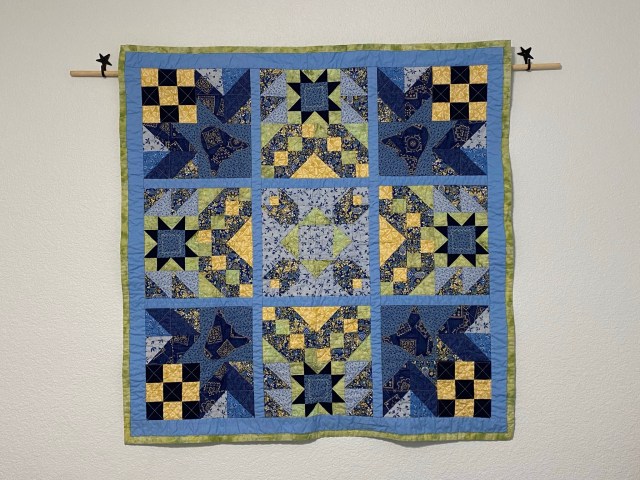
I made the blocks. Heather completed the top with banding and did the quilting.
After that, time seemed to blur, I graduated and went back to work. Time was still in short supply so I never made it back to a sewing machine. I would still go to quilt shows and would go with Heather to buy fabrics. I do help her from time to time with feedback on her designs as her “color consultant”. It’s fun to work on ideas for a new art piece she’s working on.
In 2010, I found a website on Marquetry and found that there was a local club. I joined and dived in. I loved being able to work with the veneers and making artistic things that used my sense of patterns and my woodworking skills. Over the years I’ve made a lot projects and have even ventured into scroll saw work.
After being exposed to both art forms I’ve noted a number of similarities. They both involve taking pieces of different colors, hues, and textures and combining them together to create a pattern or picture. Simple patterns are geometric and go by a number of names, nine patch, flying geese, log cabin, pinwheel, etc. In quilting the basic nine patch is the foundation of a marquetry checkerboard – the basic piecing methods are surprisingly similar between quilts and marquetry.
Louis cubes can be mystifying whether they are done in fabric or wood. I’ve made a Louis cube box top and it’s magical to watch the pattern emerge. Someday I hope to try this with fabric.
Even the tools share similar qualities. They need to cut long straight pieces and join them together with precision. I have two of those green cutting mats, one next to my sewing machine and one on my marquetry bench. Several of my marquetry hand tools I bought at quilt shows.
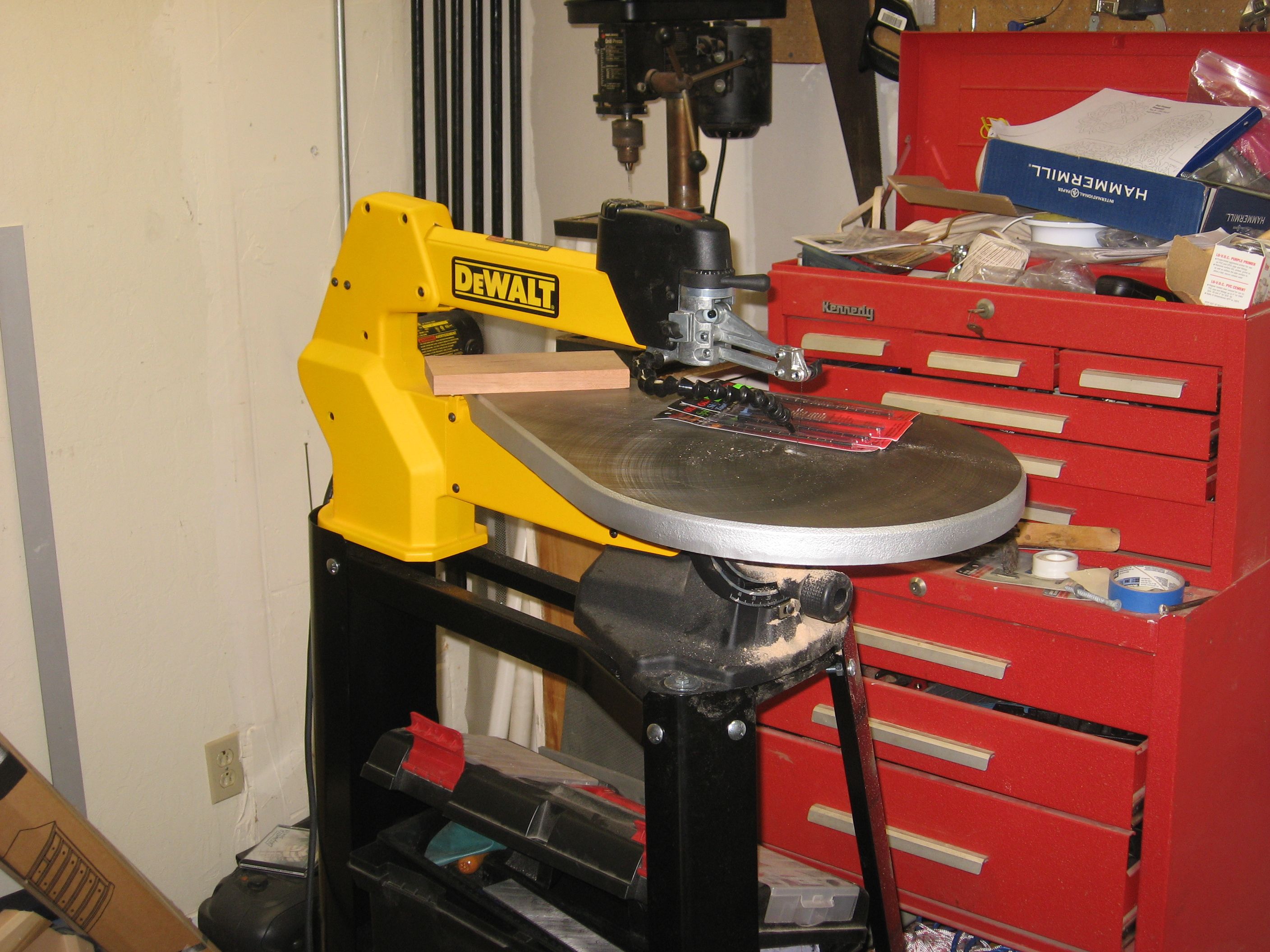
Look at a sewing machine and then here at a scroll saw and you notice that they have similar shapes – an arm supporting a tool that material (wood or fabric) can be pushed through. In the case of a sewing machine it’s to join pieces and with a scroll saw it’s to cut pieces, but how you push material through feels the same.
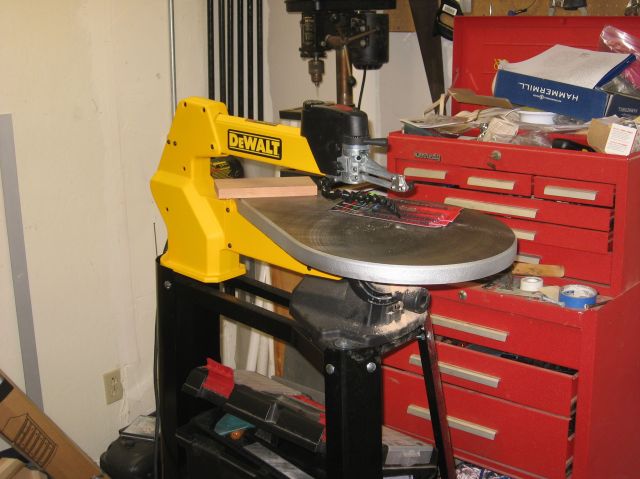
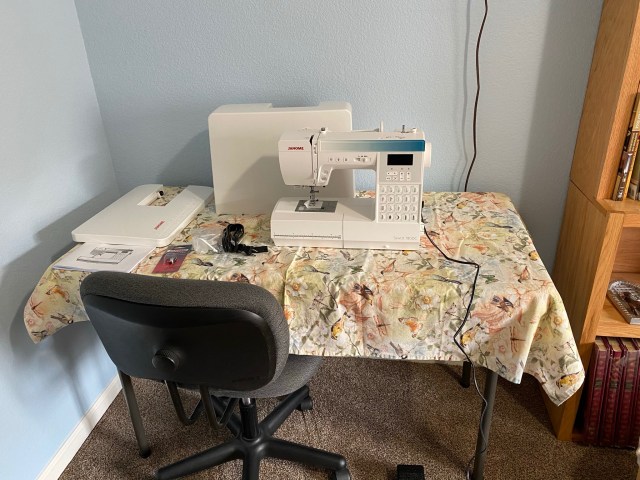
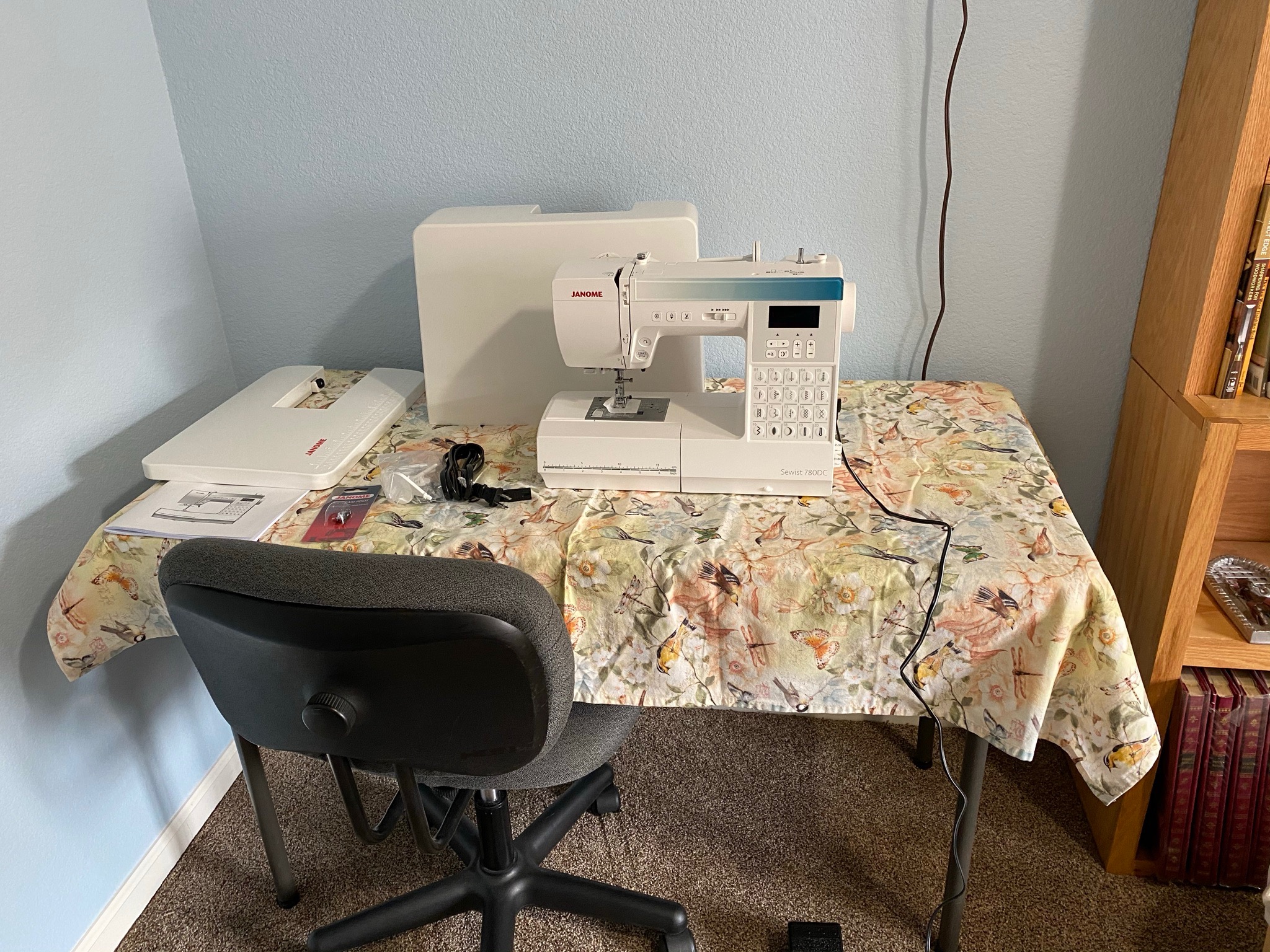
My new Janome machine. I’ll be using this for piecing. Right now the only thing I know is that the peddle goes on the floor.
One of the best marquetrains I know has often told me that she thought that women who sew are natural at the scroll saw because of the similarities between the machines. Heather has often told me that she thinks I’d be good at free motion quilting because of watching me at the saw and noting how those moves look like what she does quilting.
I’ve long held that both art forms share a lot. Sure there are differences. You don’t get the same range of colors in marquetry and things like seam allowances change the math between a quilt and marquetry pattern. Still, I see where there are commonalities.
One commonality that I am starting to see in both art forms is the mix of men and women is changing. Our marquetry group has seen a steady increase in women members and I see more men doing quilts.
I like to see how things can be combined and am intrigued by the idea of attempting the same picture in both mediums.
But first I need to gain some skill on the fabric side and get the sewing room fully set up.
After writing about this, I wonder if I should pull in my other artistic outlet and for each picture include a poem …

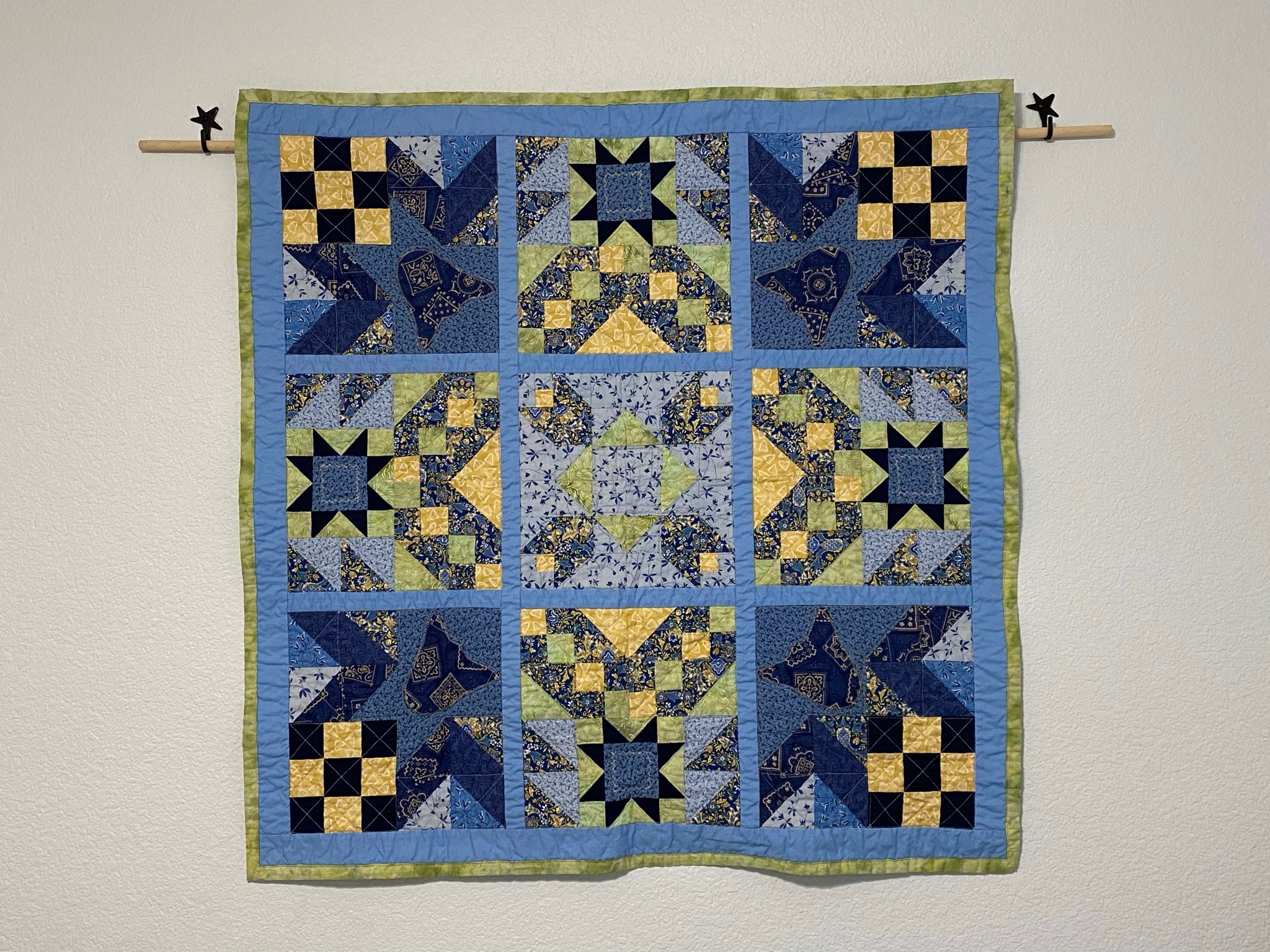



 Andrew's View of the Week