“Pi”, not “pie.” Actually, while the Raspberry Pi is interesting, what I really want to talk about today is the WS2812B standard for programmable RBG LED arrays.
For the record I’ve rejected the WS2811 standard and am not sure about the WS2813 standard – although I have to admit the LED bypass property is really a cool idea.
Okay, okay, I’ll back up, I get it, some of you are still trying to figure out if I’m talking about cooking or some strange alien technology. To clarify – the Raspberry Pi is a computer. A small, but yet powerful computer running a LINUX variant know as “Raspberry Pi OS” which is really a Debain variant customized for the Raspberry Pi.
But none of that really matters to this conversation – I just wanted to sound smarter than I am.
Back to the Pi. It’s small about 2×4 inches and it looks like this (image stolen from Amazon):
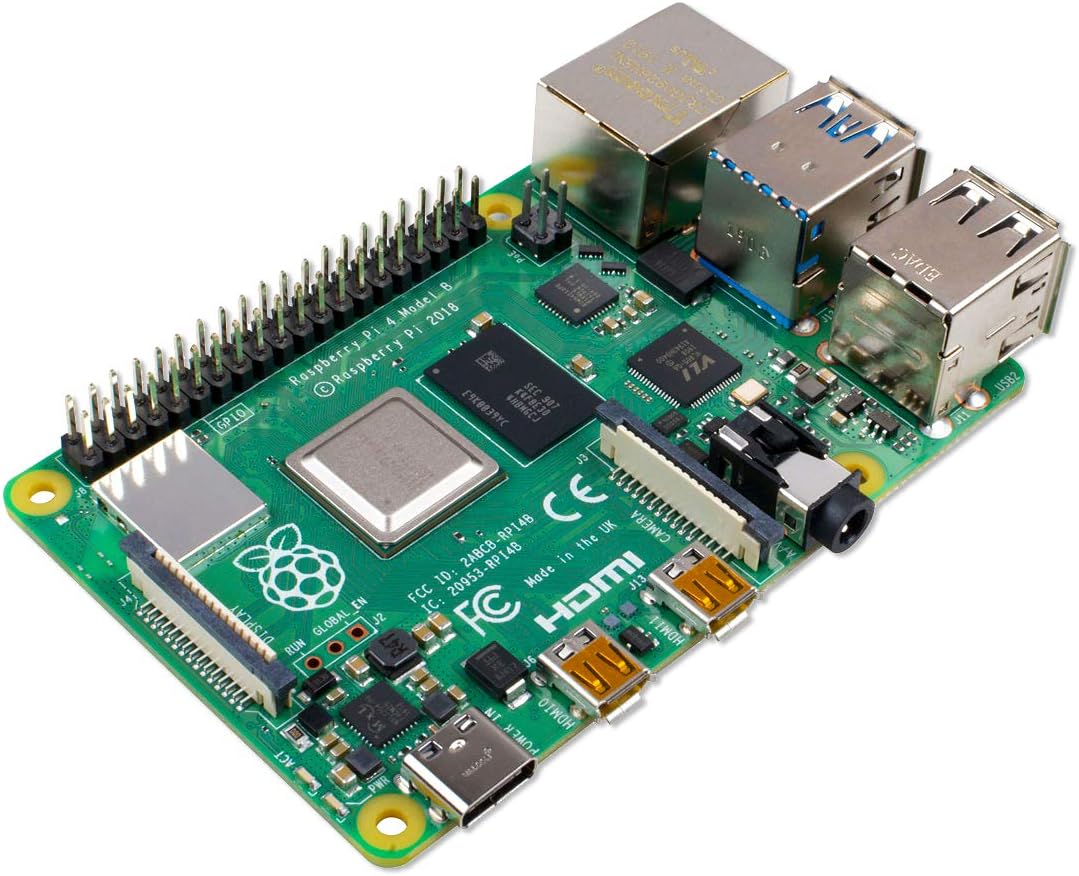
It’s a small computer that hobbyist, students and even pros use to create interesting computer controlled projects, like security cameras, temperature controllers, brains for robots, and – my favorite here: Controlling Christmas lights.
Not your standard bought at the big box store lights but special ones that look something like this (another, I stole from Amazon picture):
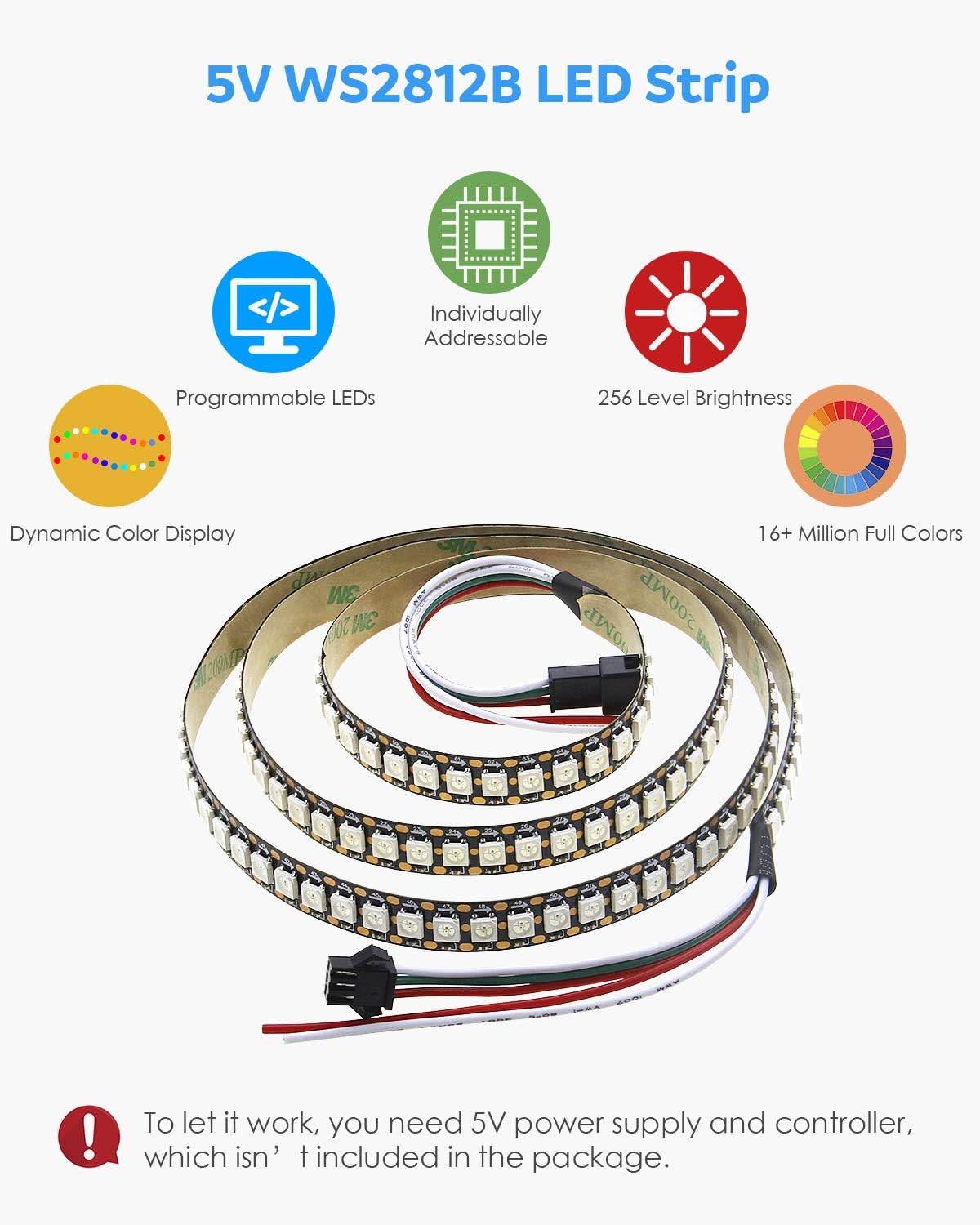
The cool thing about these lights is that you can use a computer to turn each light on individually and as a bonus change the color of the single light to anything from white, to red, to blue, to green or anything in between. This gives you a way to program a string of lights to change color in sequence or animation. For example you could put these lights around a wheel and have the lights turn off and on in sequence to make it look like the wheel is turning. Great for Santa’s Christmas train.
An extreme example of this is shown in this YouTube video:
Yes, these folks went way over the top, but the process is simple, yet rich in detail. The basic steps are:
- Setup a control system
- String a bunch of WS2812 lights
- Program
- Run the program
- Amaze your friends and family
Long time readers can see where I’m going here – yup another hobby I’m thinking of doing. Like I don’t have enough to do. Who thought you could be so busy in retirement.
Here’s the thing. I live in an area that has this annual “Parade of Lights” at Christmas and the best display wins an award. I think top prize is a sign in your yard that says, “Parade of Lights Winner.” Just once in my life I’d to have that sign in my yard and given that I have too much to do, why not?
I don’t want this to sound egotistical, but I look at some of the displays in my area and think, “I could do better than that.” Believe me, I can do better than dancing gingerbread men or Whoville painted on plywood.
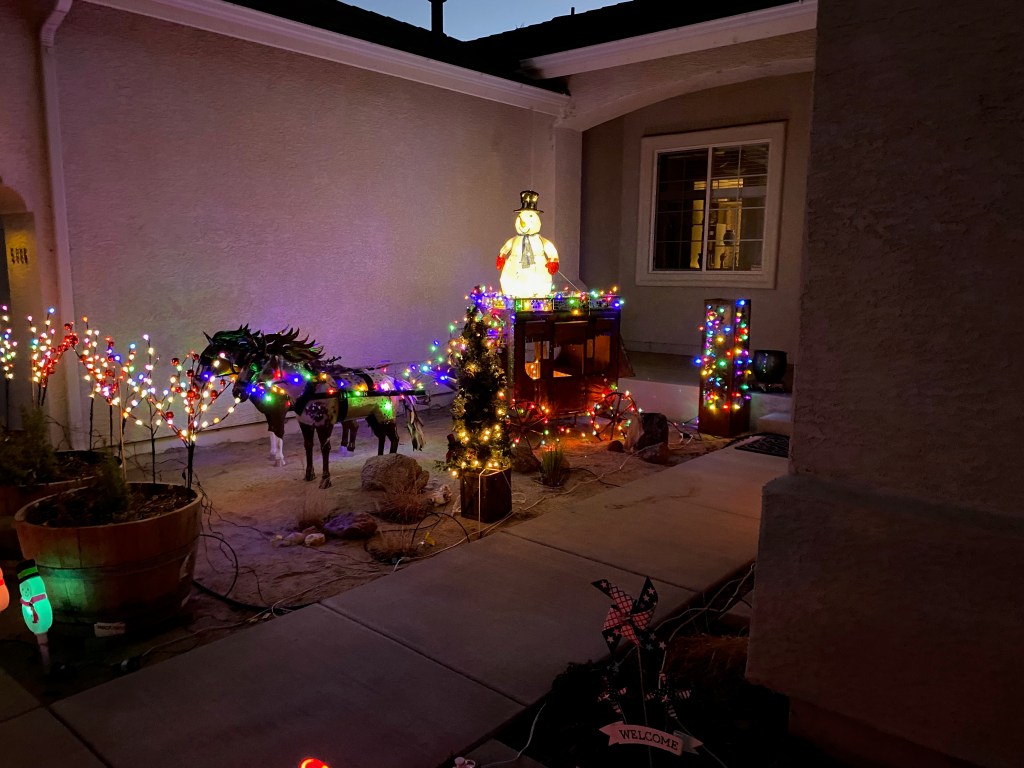
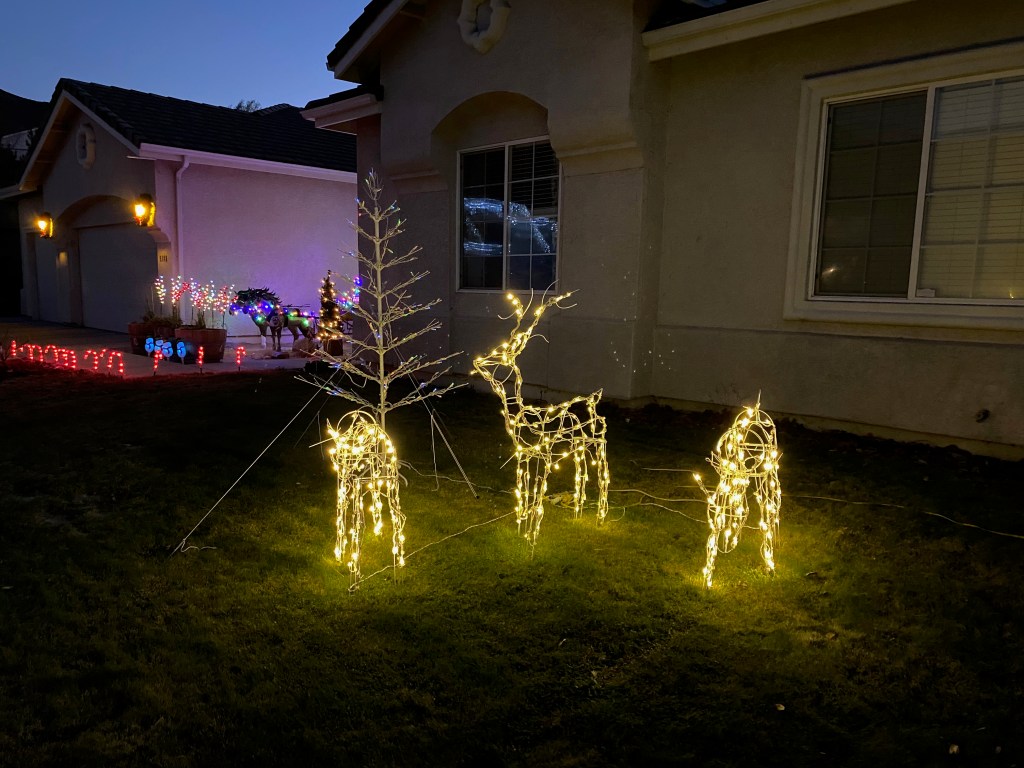
Now this year, I have gone to what is likely the biggest yard decorating effort I’ve ever done – a display in the courtyard around our new stagecoach, some stuff on the lawn and about 400 feet of lights along the roof line and in various trees. It looks nice, took me awhile and I had help from my son-in-law and grandson. BUT, it’s static, boring and just an exercise in stringing lots of extension cords. It’s not an award winning display.
As I did a little googling to figure out how all the amazing displays I see in the neighborhood are done, I realize that my whole career in electronics and computers was about enabling me to create amazing light displays.
I’ve mentioned this a few times on the blog, but I started out at 19 as an electronic technician building stuff just like this. Did it for 15 years before moving over to software and programming things just like this. Okay those things look more like telephones, TVs, websites and streaming video, but the basic principles are the same. Computer, controls something. Simple, yet complex.
A long time ago I did have an electronics shop in my home and did more than a few home brew builds of computers and things. Over the years I let that hobby go as I spent so many hours a day doing that work for a living. Now the only electronics gear I have left are a few hand tools, a digital volt meter and a not so good soldiering iron. I do a little bit of electrical work around the house, but hardcore electronics builds like the prototype computers, I just gave up on.
It’s strange how things work, but in the year and half since I’ve retired, I find that I miss plugging things together and getting new electronics working. Just last week while I was cutting out the bird ornaments on my scroll saw I started looking around the shed and thought – “I could build a small electronic bench right there for the Christmas lights project.”
Dangerous thoughts for a retired guy …