You do not need a parachute to skydive.
You only need a parachute to skydive twice.
More wisdom next week.
Andrew
You do not need a parachute to skydive.
You only need a parachute to skydive twice.
More wisdom next week.
Andrew
I’ve managed a bit of time in the shop lately. First picture is a kitty ladder:
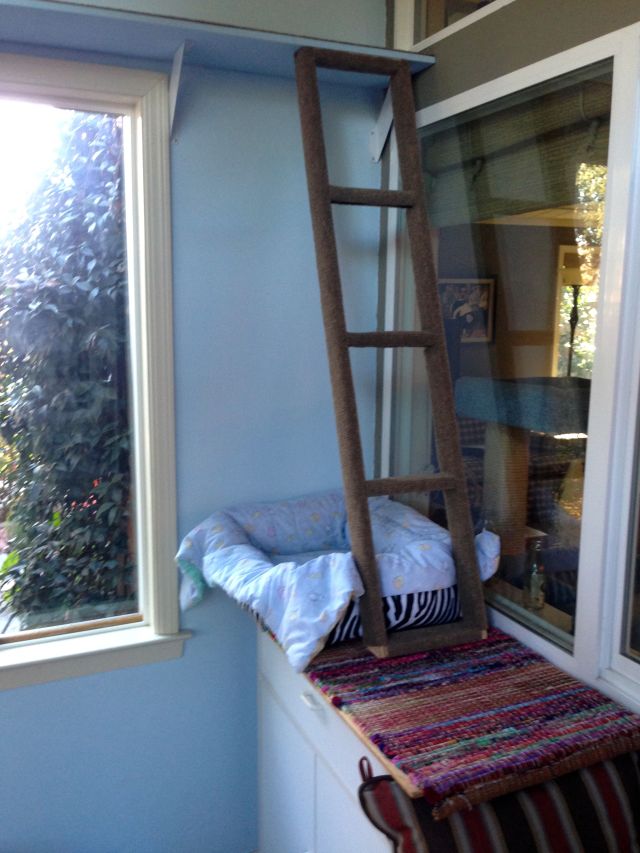
Ladder for the kitties to get to their shelf.
The kitties don’t use the shelf as much as I’d like and after thinking about it I decided it was because they only had one ladder to get to the shelf, so I made another one. This one goes over Socks’ bed and up to the shelf. It’s made from some scrap plywood covered in carpet.
And I’ve been needing more shelving in the shop so I dug through my scrap pile and built these ugly shelves:
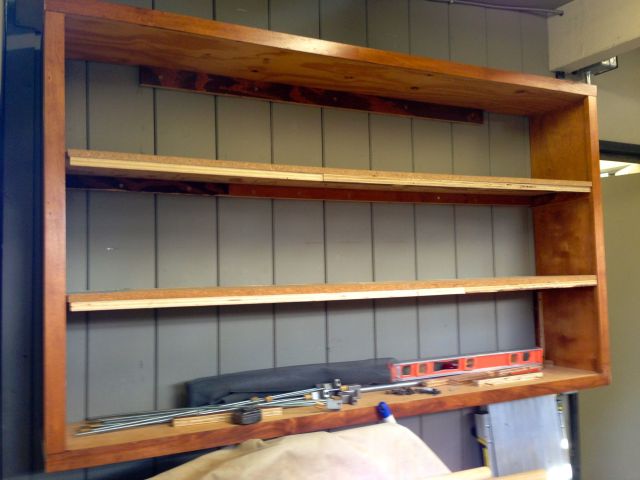
The ugly shop shelf.
At some point I’ll make some doors for this. The plywood used is from an old bookcase I had made a few decades ago. Just another scrap wood project.
I am still working on the plans for my new desk and I’ve started on plans for new cabinets in our pantry and laundry areas. Then there is the shed I am going to rebuild.
Just waiting for a bit warmer weather before starting actual construction on any of that.
If you need me – I’ll be in the shop,
Andrew
Six years ago this month I was spending my mornings taking off my pants, putting on a hospital gown and lying beneath the beam of a radiation machine. 26 times I felt the technicians pull me into place. 26 times the beast of a machine spun around me and delivered it’s invisible radiation. There was every emotion in the world under that machine, fear, hope and even a bit of laughter as I’d tell the tech some minor joke.
I remember one thing the most – my shoes.
I had a pair of brown slip-on shoes. They were more like slippers, but made for the office and guys like me who hate to tie shoe laces. In the dressing room I’d take off my shirt, pants and underwear, but I’d get to keep on my tee-shirt, socks, and was told to put my shoes back on for the walk to the machine. Stripped of all dignity, save for my fancy office shoes and a plain hospital gown.
Just before I’d get on the table in the treatment room, I’d have to surrender my shoes. They sat on the floor next to the table, waiting for the treatment to end.
Technicians would push and pull my body until it lined up with the laser beams shooting out the walls and ceiling. Then with my gown pulled up, I lie half exposed to the world as the techs retreated to the control room and the noise of the machine drowned out the 80’s rock and roll music they thought I’d like.
5 minutes became 10 and then an entirety as my mind drifted to that place of no thought where I held my body rigid and my emotions at bay. Life seemed to just drain away as I looked up at the whirling machine and the clouds painted on the ceiling.
When the machine retreated and the music again fell in my ear I sensed a person next to me pulling my gown down to cover my nakedness. Gentle words were spoken and strong hands pulled me up to a sitting position.
“Let me do the work.”
“Take your time.”
Were the words I most remember before my eyes could shed the mist of the distant land where my mind had been. The first vision I most recall was of the floor,
and the shoes waiting to walk me home.
Till next time,
Andrew
My father was a CPA and specialized in auditing. He was often hired by companies who were trying to figure out who was stealing from the company. The first thing father always asked for was a list of people’s vacations over the last year. He told me that most often the embezzler was the person who never took a vacation and seemed like the most loyal and hardest working person in the company. If this person went on vacation and gave up control they might be exposed. I was amazed how often this theory proved true.
In my life, I’ve done my best to show employers that I am not an embezzler by being lazy, disloyal, and frequently on vacation.
More wisdom next week,
Andrew


